Most deck failures don’t happen because a single board broke or a railing looked bad.
They happen because one structural problem quietly affects the entire system until the deck reaches a point where failure becomes sudden instead of gradual.
In Kansas City, where moisture, freeze-thaw cycles, and aging construction methods collide, unsafe decks are often misdiagnosed—or missed entirely—because homeowners are encouraged to focus on appearance instead of load paths, connections, and redundancy.
This article explains how decks actually become unsafe, why some failures happen without warning, and how professional builders evaluate risk differently than a surface-level inspection.
How Deck Failures Actually Start (The Big Picture)
Decks are engineered systems. Loads are intended to travel:
- From the deck surface
- Through the framing
- Down the posts
- Into the ground at the piers
When that load path is uninterrupted, a deck can perform safely for decades.
When it’s disrupted—even slightly—the stress doesn’t disappear. It moves elsewhere.
That redistribution of force is what turns small problems into system-wide failures.
The Most Critical and Dangerous Failure: When a Deck Has Dropped
The most common critical failure we see is when a deck has settled or dropped.
This usually occurs due to:
- Posts compromised by rot from poor drainage or ground contact
- Concrete piers poured below grade that never allow posts to dry
- Pier settlement caused by inadequate soil compaction
- Or a combination of all three
Once a deck drops, the structure no longer behaves as designed.
Loads that should be carried vertically through posts and piers begin creating lateral stress on components that were never meant to carry that force.
“What DIY builders and inexperienced contractors often get wrong”
Why Deck Settlement Becomes a House Problem
As a deck settles, it often begins pulling against the house.
This stresses:
- The ledger board
- Joist hangers and fasteners
- The subframing
More critically, it strains the rim board of the house, which is one of the most important framing members in the structure. The rim board ties together:
- Floor joists
- Subfloor
- Wall framing
When a deck pulls on the ledger:
- Fasteners loosen
- Flashing is compromised
- Water is allowed behind the ledger
Once water intrusion begins at this connection, deterioration accelerates rapidly—often out of sight.
This is why deck settlement is rarely an isolated issue.
“How long decks are really expected to last in Kansas City”
Why Some Decks Look Safe—but Aren’t
One of the most misleading safety issues we encounter involves railings.
A railing may appear solid, but still be:
- Relying on corroded fasteners
- Held together by compromised wood fibers
- Missing critical connections due to installer error
In the early 2000s, the transition from CCA to ACQ-treated lumber introduced widespread fastener corrosion issues. Many decks built during that period now have railing connections that are structurally unsound—even if they don’t visibly move yet.
When combined with deck settlement, these hidden weaknesses often lead to sudden failures, not gradual ones.
Why Some Failures Happen Suddenly Instead of Gradually
Homeowners often assume unsafe decks will “warn them” before failing.
In reality, once redundancy is lost:
- One compromised fastener
- One weakened post
- One overstressed connection
can result in immediate failure when someone leans on a railing or a group gathers in one area.
This is why railing systems are not just cosmetic—they are critical safety assemblies.
How Professional Railing Design Reduces Risk
At Acumen Renovations, we intentionally design railing systems with redundancy, especially on wood decks.
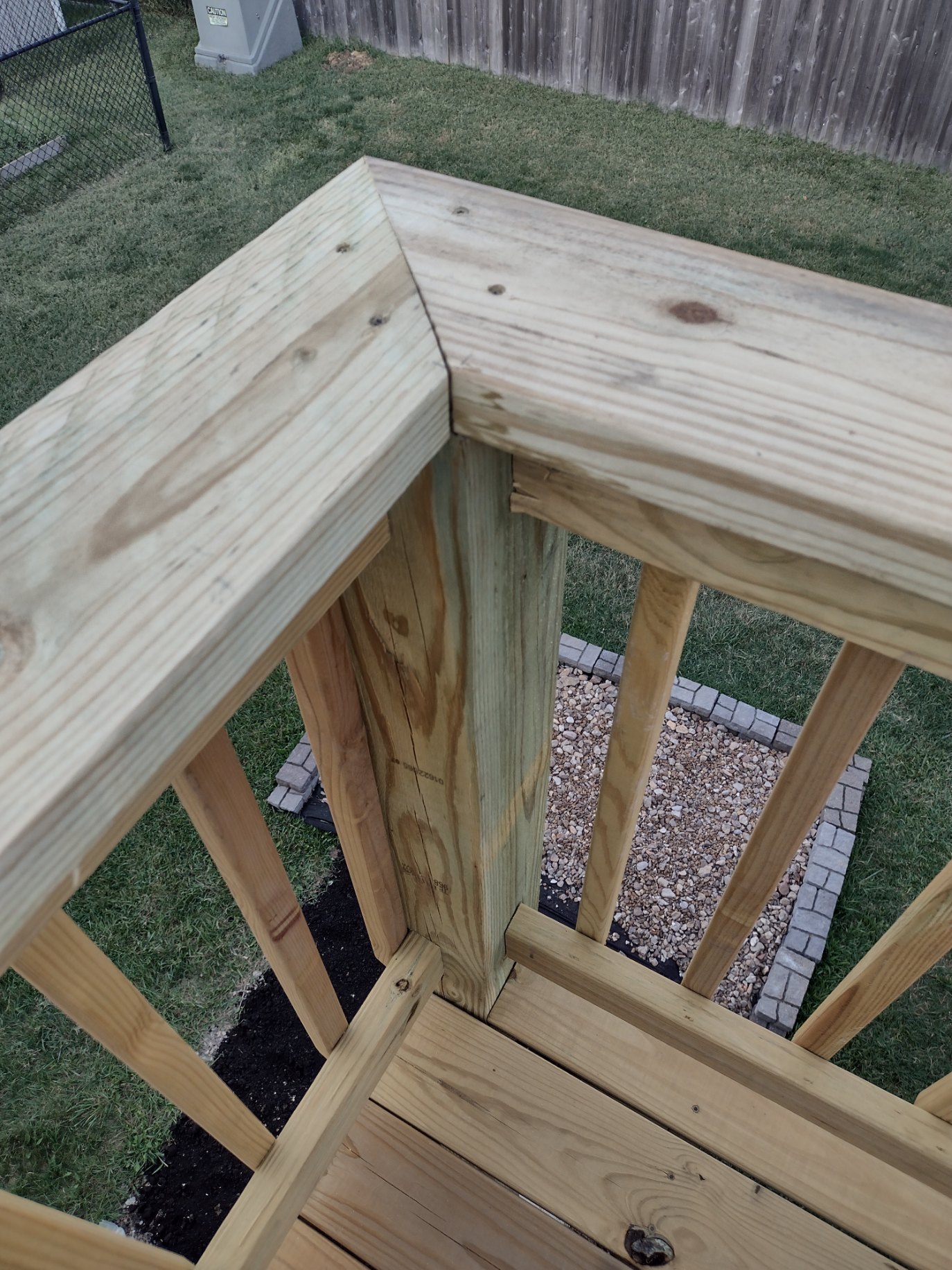
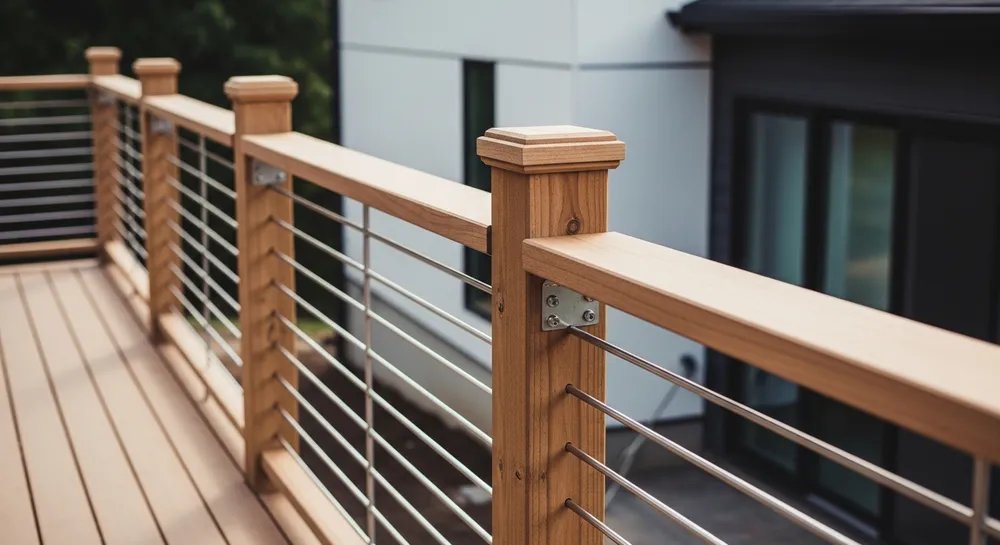
A key design decision is whether the railing is built:
- Between the posts, where each section acts independently
- Or over the posts, using a continuous drink rail
An over-the-post system ties all posts together with a single framing member, allowing loads to be distributed across the entire railing system instead of relying on isolated connections.
This structural redundancy dramatically reduces the likelihood of sudden railing failure—even if one connection begins to weaken.
“What to look for in a qualified deck contractor”
Why These Issues Change Repair vs Replacement Decisions
Once a deck shows signs of:
- Settlement
- Load redistribution
- Compromised connections
- Or water intrusion at the ledger
The question is no longer “What can be fixed?”
It becomes “Can this deck safely support a reasonable remaining service life?”
Because repairs carry liability, professionals cannot ignore unsafe conditions elsewhere in the system. In many cases, surface repairs would only delay a failure that is already in progress.
How We Evaluate Deck Safety Differently Than a Visual Inspection
A visual inspection looks at what you can see.
A professional safety evaluation looks at:
- Load paths
- Redundancy
- Connections
- Movement
- Remaining service life
That difference is why two decks with similar appearances can have very different risk profiles.
Final Takeaway
Decks don’t usually fail because of one obvious issue.
They fail because a small structural problem affects the entire system over time.
Understanding how that happens is the difference between:
- Cosmetic fixes
- Responsible repairs
- And knowing when replacement is the only safe option
This is why deck safety decisions should always be based on structure, not appearance.
Don’t Wait Until It Becomes a Problem
Most deck issues don’t look serious — until they are.
In Kansas City, hidden damage, moisture, and structural weaknesses often go unnoticed until failure becomes sudden and dangerous.
If you’re not 100% confident in your deck’s safety, it’s worth taking a closer look now — not later.
Schedule your consultation and get peace of mind before problems surface.